

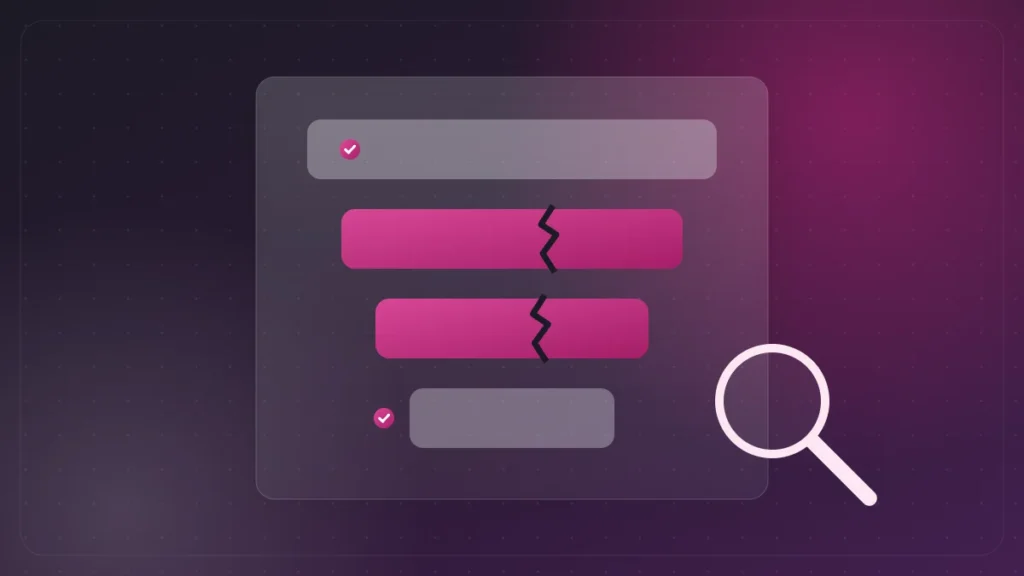
Most business owners who say “digital marketing doesn’t work for us” are not wrong about the outcome. The posts go out, the ads run, the agency sends a report full of green arrows, and the phone still doesn’t ring often enough. The problem is rarely that digital marketing as a whole has failed. It is usually one or two specific breaks in the chain between attention and revenue, and they are hidden because every team only looks at its own link.
This guide gives you a way to find those breaks. It covers the seven causes we see most often, how to tell which one applies to you, and the order in which to fix them so you stop paying for activity that can’t produce results.
Before you diagnose: agree on what “results” means
A campaign can look like a failure or a success depending on which number you read. Followers, impressions and clicks are signals of reach. Enquiries, booked appointments, orders and repeat purchases are signals of business. Write down the one outcome that pays your bills, the number you get today, and the number you need. Every cause below is judged against that outcome, not against platform metrics.
The 7 most common causes, and how to fix each one
1. You are measuring activity, not outcomes
Symptom: reports show reach and engagement, but nobody can say how many enquiries came from each channel last month.
Without outcome tracking, every channel looks equally good, so budget follows opinions. In Saudi Arabia this is especially common because a large share of leads arrive by phone call or WhatsApp, and neither is counted unless you set it up deliberately.
Fix: define three to five key actions (form submit, WhatsApp click, call click, booking, purchase) and mark them as key events in Google Analytics 4. Import the ones that matter into your ad platforms so bidding learns from real outcomes. Add a simple “How did you hear about us?” question to your sales process, because no tracking setup sees everything.
2. The offer is not clear, or not different
Symptom: people visit and leave; competitors with weaker products win the deal.
Marketing amplifies whatever message you give it. If your homepage says “quality service at competitive prices,” you have told visitors nothing a competitor can’t also say. Google’s research on the “messy middle” of purchase decisions describes buyers looping between exploring and evaluating options; a vague offer loses at the evaluation step.
Fix: complete this sentence and put it above the fold: “We help [specific customer] get [specific outcome] without [specific pain].” Back it with proof: real project photos, specific numbers you can verify, a guarantee you can honour, or clear pricing ranges.
3. You are speaking to everyone
Symptom: cheap clicks, high bounce rate, enquiries that never close.
Broad targeting buys attention from people who will never buy. A clinic in north Riyadh does not need impressions in Dammam; a B2B supplier does not need students.
Fix: describe your best existing customers (location, size, budget, trigger that made them search) and narrow targeting, keywords and creative to them first. You can widen later once the core audience converts profitably.
4. Traffic lands on the wrong page
Symptom: ads and posts send people to the homepage, and the homepage tries to serve ten audiences at once.
Every extra click between interest and action loses people. A visitor who searched for a specific service should land on a page about that service, with the next step obvious on a phone screen.
Fix: build one focused page per main service or campaign. Our landing page checklist for paid ads walks through the ten checks we run before scaling spend.
5. Channels are chosen by fashion, not by intent
Symptom: you are on every platform because competitors are, and none of them performs.
Channels serve different moments. Search captures existing demand: people already looking. Social and video create demand: people who were not looking yet. Mixing them up leads to wrong expectations, such as judging a brand video by next-day sales.
Fix: map each channel to a stage of the journey and judge it by that stage’s metric. If you are unsure where to start, our comparison of SEO and paid advertising includes a decision framework.
6. Follow-up is slow or missing
Symptom: leads arrive, but many go cold before anyone replies.
This is the most expensive cause because the marketing has already worked. A WhatsApp message answered the next afternoon often loses to a competitor who answered in ten minutes.
Fix: set a response-time target, assign an owner for every channel, use saved replies for common questions, and log every lead with its source. Then review lost leads monthly and ask why.
7. Too little time, budget or consistency to learn
Symptom: campaigns are switched every few weeks; SEO is abandoned after two months.
Every channel needs a learning period. Google notes that automated Smart Bidding strategies need a learning phase of about one to two weeks, and frequent changes reset it. SEO usually takes months before compounding. Spreading a small budget across many channels means none gets enough data to improve.
Fix: concentrate. Fund fewer channels properly and commit to a review window before judging them. Our guide to calculating an advertising test budget shows how to size that commitment from your own numbers.
A quick self-diagnosis table
| What you see | Most likely cause | Fix first |
|---|---|---|
| Good reach, no idea what it produced | Measuring activity (1) | Key events and lead source logging |
| Visits but few enquiries | Offer (2) or landing page (4) | Rewrite the promise; build a focused page |
| Enquiries that never become customers | Audience (3) or follow-up (6) | Narrow targeting; set response times |
| Results swing month to month | Consistency (7) | Fewer channels, longer review windows |
| Every platform, no standout | Channel fit (5) | Map channels to journey stages |
The order matters: fix from the bottom of the funnel up
It is tempting to start by buying more traffic. Usually that is the last thing to do. Fix in this order:
- Measurement, so you can see whether any change helps.
- Follow-up, because it recovers value from leads you already pay for.
- Offer and landing pages, so each visitor is more likely to act.
- Audience and channel focus, so traffic is the right traffic.
- Scale, only once the steps above hold.
A hypothetical example: a dental clinic spends SAR 8,000 a month on ads and receives 60 WhatsApp enquiries, but books only 9 appointments. Doubling the budget might produce 120 enquiries and 18 bookings. Fixing response time and adding prices to the landing page might raise bookings from the same 60 enquiries to 15, without spending more. The second path also makes every future riyal of ad spend more productive. (These numbers are illustrative, not client results.)
What realistic progress looks like
Measurement fixes take days. Landing page and follow-up improvements often show within a month. Audience and channel changes need a full learning cycle. SEO and brand work compound over quarters. No honest marketer can guarantee a specific number, but you should always be able to see which link of the chain improved and why.
Next step
Pick the cause from the table above that matches your situation and fix only that one this month. Measure the before and after against your single business outcome. If the problem turns out to be bigger than one fix, that is usually a sign the channels lack a shared plan, which is exactly what our marketing strategy and growth planning service is built to provide. If you would like a second opinion on where your chain is breaking, request a consultation and tell us which symptom you see.
Ready to start? Tell us about your business
We review your request and reply with a clear plan and a quote.
Request a Quote